
Departure Schedule
Morning departures
Fastest trip1 hrs 27 min
Longest trip1 hrs 42 min
Earliest05:35
Latest11:58
Departures27
Afternoon departures
Fastest trip1 hrs 31 min
Longest trip1 hrs 42 min
Earliest12:20
Latest17:55
Departures16
Evening departures
Fastest trip1 hrs 31 min
Longest trip1 hrs 41 min
Earliest18:20
Latest20:46
Departures6
Travelling from Rome to Florence by Train
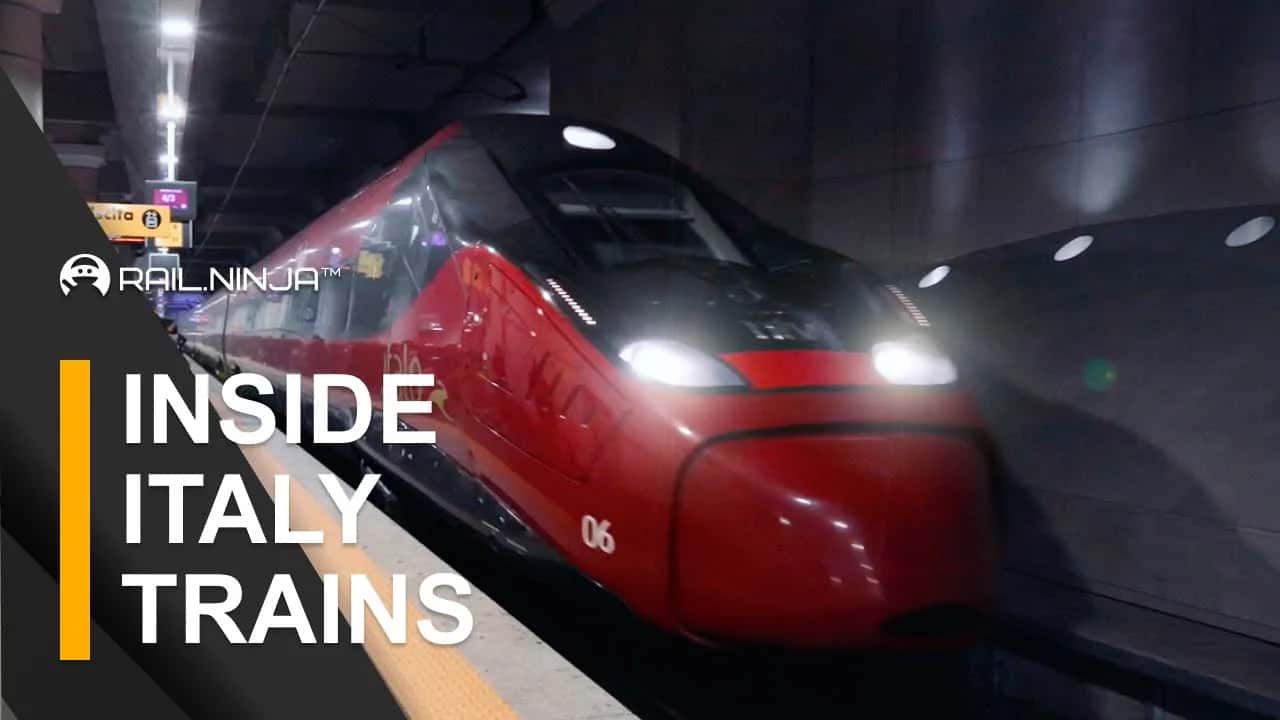
Planning a train journey between Rome and Florence and trying to work out the rome debate — visit Rome first, or head straight to Florence? Trains from Rome to Florence can reach up to 155 miles per hour, with free Wi-Fi included across Standard, Business, and Executive classes, so travelers can stay connected while watching Tuscany's rolling hills and cypress trees pass by the window. Rome, capital of the Roman Empire and later the papacy, carries over 2,500 years of continuous power, with layers of ancient ruins and Baroque architecture, monumental public sculptures, grand fountains, the Colosseum, and the Vatican Museums shaping western civilization and global religion — Rome requires public transport or taxis to navigate its energetic, dramatic sprawl. Florence, by contrast, birthed the Renaissance, modern banking, and political philosophy, and it's 100% walkable, with all major sights, including the Duomo, the Uffizi Gallery — home to works by Botticelli and Da Vinci — and Michelangelo's David in the Accademia Gallery, within walking distance of a compact, pedestrian-friendly city center; you can explore Florence without using public transport at all.
Rome to Florence trains Information
Rome
231 km
1 h 27 m
Shortest travel time:
$54
Lowest ticket cost:
49
Avg. daily departures:
05:35
Earliest departure:
20:46
Latest departure:
Popular questions about trains from Rome to Florence
Yes, there are numerous direct trains from Rome to Florence with one short stop max. There are various bullet trains running on the route, including the Italo train, Frecce, and Intercity. They differ by travel durations and amenities.
The fast trains from Rome to Florence are run by two Italian operators, ItaloTreno and Trenitalia. Both provide modern comfortable trains with great onboard amenities. You may find out more here: Italo high-speed train.
The fastest train ride from Rome to Florence takes as little as 1 hour and 30 minutes, the train travels at speeds of up to 190 miles per hour. Among the major perks apart from the short travel time is that such a high-speed train from Rome to Florence departs from and arrives at the heart of town (the Rome Termini Station and the Florence Santa Maria Novella Station).
The first departure of the Rome to Florence train is at about 5:30 a.m., the last one leaves at around 8 p.m. Since the route is very popular, you may choose from over 15 available daily departures.
Based on the travel class you select as well as the availability, day of the week, among other factors, prices for train tickets from Rome to Florence start from about 55 USD.
Of course, it is advisable to book tickets for your train from Rome to Florence Italy beforehand. This way you'll safeguard yourself from the possibility of tickets being sold out for the date and time you need, plus you'll most likely get ahold of better seats and prices due to availability and other factors.
When booking tickets for a bullet train from Rome to Florence on Rail Ninja, a seat will be assigned to you. We always do our best to get the best available options according to the indicated by you seat preferences.
Trains can travel up to 155 miles per hour between cities, which is how the roughly 261 km distance is covered in as little as 1 hour and 25 minutes, making it one of the fastest city-to-city connections in Italy.
It comes down to the rome debate every traveler faces — visit Rome for ancient Rome, the Colosseum, and the Vatican Museums' Sistine Chapel, or visit Florence for the Renaissance, the Uffizi Gallery, and Michelangelo's David; the fast train makes it easy to do both without wasting a day on transport.
Yes — Florence is known for its walkability and compact city center, and it's 100% walkable, with all major sights within walking distance of one another; you can explore Florence without using public transport at all. Rome, by comparison, requires public transport or taxis to navigate its larger, more spread-out layout of iconic sites like the Spanish Steps and Via del Corso.
Rome shaped Western law and global religion over more than 2,500 years of continuous power, with architecture spanning ancient ruins to Baroque structures, monumental public sculptures, and grand fountains — Rome is home to over 2,000 fountains and 83 museums, layering ancient history directly into modern daily life along the Tiber River.
Florence is known as the birthplace of the Renaissance and became a center of humanism during that era, birthing modern banking and political philosophy alongside its art. The Uffizi Gallery houses works by Botticelli and Leonardo da Vinci, and Florence feels like an intimate outdoor art museum, shaped around beauty and craftsmanship in every cobblestone street and piazza, including views from Piazzale Michelangelo over the Duomo and rooftops below.
Yes — Florence has a greater number of quality restaurants than Rome and offers excellent food at lower prices, with Florentine steak as a must-try local specialty, the Mercato Centrale offering a variety of Italian foods, and a vibrant coffee shop scene throughout the compact city center.
Yes — Florence offers more day trip options than Rome, with easy access to Tuscany's rolling hills, cypress trees, and Chianti Classico wine country, giving travelers with extra time a chance to fully enjoy the region beyond the city itself.
Yes — booking a Florence hotel near the historic center lets travelers get out early to see iconic sites like the Duomo with fewer crowds, since Florence's compact, pedestrian-friendly layout makes early starts easy without needing a car or public transport.
The cheapest way to see both Rome and Florence is the direct high-speed train, running about 61 times daily at fares starting around €14.90 — far more cost-effective and time-efficient than driving, and it lets travelers fully enjoy one city in the morning and be settled into the other by afternoon.
Yes — Rome, often called the eternal city, is an Italian city closely tied to Vatican City, home to St. Peter's Basilica and the Roman Forum, both worth seeing before or after a rome to florence train ride, especially since Vatican City sits just a short bus or metro ride from Roma Termini.
Yes — Florence, a genuinely walkable city, suits a self-guided tour far better than Rome, where sights like the Roman Forum and Trevi Fountain are spread across a wider area better explored with organized transport or a guided tour.
Yes — Leonardo da Vinci's legacy is deeply tied to Florence's Renaissance-era culture, much as Rome's ancient history shaped Italy's identity across other destinations, including Venice, giving each city a distinct role in the country's cultural heritage.
Yes — Ponte Vecchio in Florence is within easy walking distance of the train station, much like Roma Termini sits close to many of Rome's main sights, making both cities convenient to explore right after stepping off the train.
Yes — San Gimignano makes for a popular day trip from Florence, reachable by regional bus or organized tour, offering a quieter, walkable alternative to the busier destinations found in either Florence or Rome.
Yes — Rome Florence travel is a common part of the rome debate for first-time visitors, since both are among the world's most historic cities, and transportation options between Rome and Florence include high-speed trains, regional trains, and buses, giving travelers plenty of ways to combine both stops.
Yes — the Vatican Museums and the Sistine Chapel are part of nearly every visit Rome itinerary, alongside St. Peter's Basilica, one of the largest churches in the world, all located within Vatican City and reachable by metro or a short walk from central Rome.
Yes — Roma Termini is the best starting point for a rome to florence trip, and taking the high-speed train remains the cheapest way to travel between the two once you factor in speed and convenience over regional trains or buses.
The Rome debate matters more than it seems: this guide is built for anyone planning a Rome-Florence trip who wants clear train times, prices, and a straightforward answer on which city to see first — whether you're a first-time visitor short on days or someone splitting a longer Italy itinerary between the two, knowing the fastest, cheapest way to move between them saves real time and money on the ground.
9.2 / 10 based on 57 reviews
Extensive Network
One platform, 34+ destinations, 700+ routes around the globe.
Convenient Booking
We speak your language and offer over 20 payment methods.
Excellent Rating
Read authentic Rail Ninja reviews and see what our travelers say about us.
Flexible Planning
You can conveniently book train tickets for up to a year in advance!
Real Human Support
Need a hand? Contact our customer support before or during your trip.