
Departure Schedule
Morning departures
Fastest trip6 hrs 51 min
Longest trip8 hrs 58 min
Earliest00:36
Latest11:37
Departures5
Afternoon departures
Fastest trip6 hrs 51 min
Longest trip6 hrs 51 min
Earliest13:37
Latest13:37
Departures1
Night departures
Fastest trip7 hrs 5 min
Longest trip7 hrs 5 min
Earliest23:00
Latest23:00
Departures1
Travelling from Prague to Budapest by Train
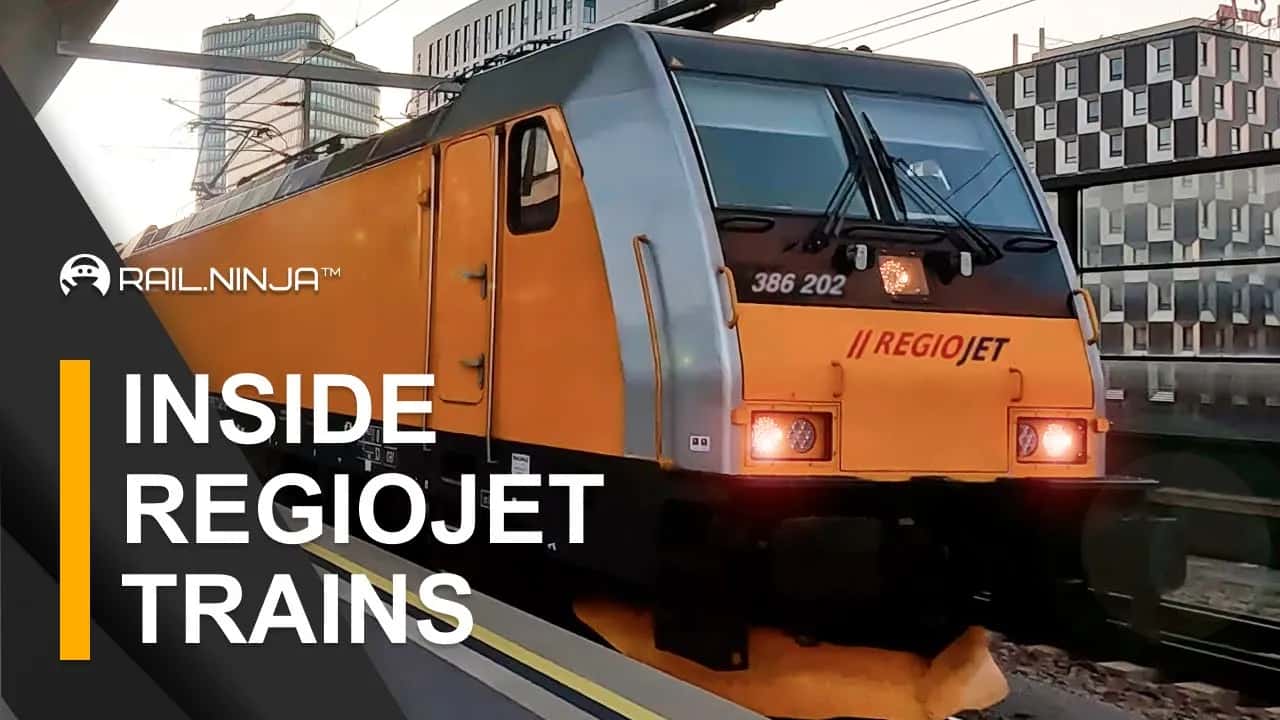
Looking for the fastest, most comfortable way to get from Prague to Budapest? This guide covers direct EuroCity train times and prices, how the train compares to flying, driving, or the bus, and what's worth seeing along the way on this central European adventure. The short version: a direct train takes around 6 hours 30 minutes to 7 hours, costs from €20, and remains the most comfortable option once you factor in airport time for flights (a flight time of one hour and ten minutes) or the longer bus ride. Seven direct EuroCity trains run daily between Praha hlavní nádraží and Budapest Nyugati station, with every seat offering free Wi-Fi and power sockets, and RegioJet running two additional daily trains with extra onboard comfort. The scenic route covers approximately 530 km through three countries — the Czech Republic, Slovakia, and Hungary — passing Bratislava, Győr, and southern Moravia along the way. Flights with Ryanair take just over an hour but often close the time gap once airport transfers are added, buses run around seven hours from €20 via Flixbus, and driving takes five to six hours via Brno and Slovakia. Private transfers are also available from €450, offering door-to-door service in about five hours. For travelers who'd rather not plan it all themselves, guided tours of Prague and Budapest last around eight days, with a shorter Prague to Budapest Transfer Tour costing €99 per person, tour includes stops in Bratislava with a local guide and local experts along the way. On Rail Ninja, you can browse the full departure schedule and book your Prague to Budapest train tickets in just a few minutes.
Prague to Budapest trains Information
Prague
Prague Main Station, CzechiaPraha-Holešovice, CzechiaPrague UAN Florenc, CzechiaPrague Na Knížecí bus station, CzechiaPrague Cerny Most bus station, CzechiaPrague Main Station - Parking, Czechia
443 km
Budapest
Keleti, HungaryNyugati, HungaryDeli, HungaryKelenföld, HungaryZuglo, HungaryNepliget Bus Station, HungaryRakospalota-Ujpest, Hungary
6 h 51 m
Shortest travel time:
Fr.50
Lowest ticket cost:
7
Avg. daily departures:
00:36
Earliest departure:
23:00
Latest departure:
Popular questions about trains from Prague to Budapest
The Railjet train that runs on the route has three travel classes to select from: Second Class, First Class, and Business Class. All coaches are air-conditioned, have good comfortable seats with fixed or foldable tables, free WiFi. Snacks and drinks can be bought from snack carts or the restaurant car. Learn more about the classes of high-speed Railjet train.
Yes — EuroCity (EC) trains run directly between Praha hlavní nádraží and Budapest Nyugati station, with no need to change trains. Seven direct trains run daily, and the train journey takes approximately seven hours in either direction, with train tickets starting at €20 when booked in advance and every seat offering free Wi-Fi and power sockets.
There's no direct rail link from Václav Havel Airport Prague to Budapest — you'll first need to reach Praha hlavní nádraží by metro or bus, then board the EuroCity service onward to Budapest, a short trip that adds roughly 30–40 minutes before your main train departs.
Yes — RegioJet operates two daily trains on this route, offering fewer daily departures but more comfort onboard, including a dining or bistro car serving hot and cold drinks and light meals for those who want more than a snack during the roughly 7-hour trip.
The flight time from Prague to Budapest is one hour and ten minutes, and Ryanair offers daily flights at competitive prices, though airport transfers and check-in often close the time gap with the train. Buses are typically the lowest-cost option overall, with Flixbus running around ten daily departures from €20, but the train offers the best balance of comfort, scenery, and city-centre-to-city-centre convenience.
Buses depart from Florenc Bus Station in Prague and arrive at Népliget Bus Station in Budapest, with bus travel taking around seven hours in either direction.
Bus travel between Prague and Budapest takes about seven hours and is usually the cheapest option, while driving takes about five to six hours, with the fastest driving route running via Brno and Slovakia. Both are viable alternatives if price matters more than the train's comfort, and driving offers the flexibility to stop in Bratislava or Győr along the way.
Yes — private transfers from Prague to Budapest start at €450 and offer door-to-door service, ideal for travelers with heavy luggage or those wanting to avoid public transport altogether. The direct route takes about five hours, and sightseeing stops can be added for an extra fee, effectively turning the ride into a private tour through southern Moravia and Slovakia.
Both work well — a solo traveler can easily manage the direct train or bus independently, while joining a small group tour offers the chance to meet fellow travelers and travel companions, with a tour director and local experts handling logistics so you can focus on absolutely amazing sights rather than schedules.
The journey includes stops in three different countries — the Czech Republic, Slovakia, and Hungary — passing through southern Moravia. Bratislava's Old Town is compact and walkable and worth a short walk if you break up the trip, Győr is a beautifully preserved Baroque city, and Lednice Palace, a UNESCO-listed Neo-Gothic masterpiece, sits just off the route.
Prague Castle (including the Old Royal Palace and Golden Lane), St. Vitus Cathedral, the Astronomical Clock — dating back to 1410 — Charles Bridge, and the Town Square are all within a short walk of one another in the compact, walkable historic centre, with cobblestone streets and hidden courtyards rewarding anyone who wanders off the main tourist path.
Prague's historic core escaped major physical destruction during World War II, leaving a deeply preserved medieval narrative intact — a rare quality among major Central European capitals. Prague is famous for its rich brewing heritage, and locals often joke that the beer is cheaper than water, making an evening of live music and local pubs an easy way to spend personal free time.
Budapest's essential stops include the Hungarian Parliament Building — a Neo-Gothic masterpiece on the edge of the Danube — Buda Castle, Fisherman's Bastion with its breathtaking panoramic views, Heroes Square, and Chain Bridge connecting Buda and Pest. Budapest was formed in 1873 from the unification of Buda, Pest, and Óbuda, and its architecture still reflects the grand 1896 Millennium celebrations.
Budapest has a unique nightlife centered around ruin bars scattered through the old Jewish Quarter, blending striking 19th-century architecture with modern energy, while Prague's nightlife leans more toward historic pubs, cheap beer, and classical music performances in atmospheric, centuries-old venues.
Prague's Gothic architecture and compact old town define its character, offering an intimate, walkable experience centered on the Castle District and the Vltava River, while Budapest is larger and requires more time to explore, with grand 19th-century architecture, thermal bath culture, and Budapest's culture revolving around socialization and outdoor life along the Danube.
Both work — a solo traveler can easily manage the direct train between the two, but a guided Budapest tour with a tour group and local guide is worth considering if you want a local expert to walk you through the Opera House, St. Stephen's Cathedral, and the layers of Habsburg Empire and Ottoman history shaping Budapest's more dynamic, cosmopolitan nightlife today.
Yes — Prague Castle sits above the old town, within easy reach of the cobbled streets leading down to the Vltava, and it's centrally located enough that a walking tour can comfortably combine the castle, the Astronomical Clock, and the Charles Bridge in a single day trip without extra cost for transport between sites.
Not quite — Prague offers preserved medieval architecture spanning Gothic, Renaissance, and Baroque eras, giving its Old Town a romantic, fairy-tale-like atmosphere, while Budapest's cultural identity is shaped by layers of historical influences, including Ottoman and Habsburg rule, resulting in a rich 19th-century architectural heritage that feels grander and more spread out than Prague's compact core.
Both Prague and Budapest sit within the broader story of Eastern Europe during the Cold War, with the fall of the Berlin Wall in 1989 marking a turning point that reshaped daily life across the region — a piece of rich history many travelers explore further during their personal time between guided stops on a tour.
Yes — Jun, Jul, Aug, and Sep are the most popular months to explore Prague's art nouveau buildings and its literary heritage, notably associated with figures like Franz Kafka, since long daylight hours make it easier to fit in a full day trip or evening walking tour without rushing.
Yes — small group tours covering both cities are a popular way to make new friends while comparing two cities shaped by very different pasts: Prague's quiet, preserved medieval streets against Budapest's louder, more cosmopolitan urban culture — all this within a single, well-paced central Europe itinerary.
7.1 / 10 based on 54 reviews
Extensive Network
One platform, 34+ destinations, 700+ routes around the globe.
Convenient Booking
We speak your language and offer over 20 payment methods.
Excellent Rating
Read authentic Rail Ninja reviews and see what our travelers say about us.
Flexible Planning
You can conveniently book train tickets for up to a year in advance!
Real Human Support
Need a hand? Contact our customer support before or during your trip.