
Departure Schedule
Morning departures
Fastest trip2 hrs 25 min
Longest trip6 hrs 29 min
Earliest00:13
Latest11:07
Departures20
Afternoon departures
Fastest trip2 hrs 25 min
Longest trip2 hrs 52 min
Earliest12:07
Latest17:11
Departures12
Evening departures
Fastest trip2 hrs 25 min
Longest trip2 hrs 52 min
Earliest18:07
Latest20:30
Departures6
Night departures
Fastest trip2 hrs 25 min
Longest trip7 hrs 24 min
Earliest21:07
Latest22:11
Departures4
Travelling from Salzburg to Vienna by Train
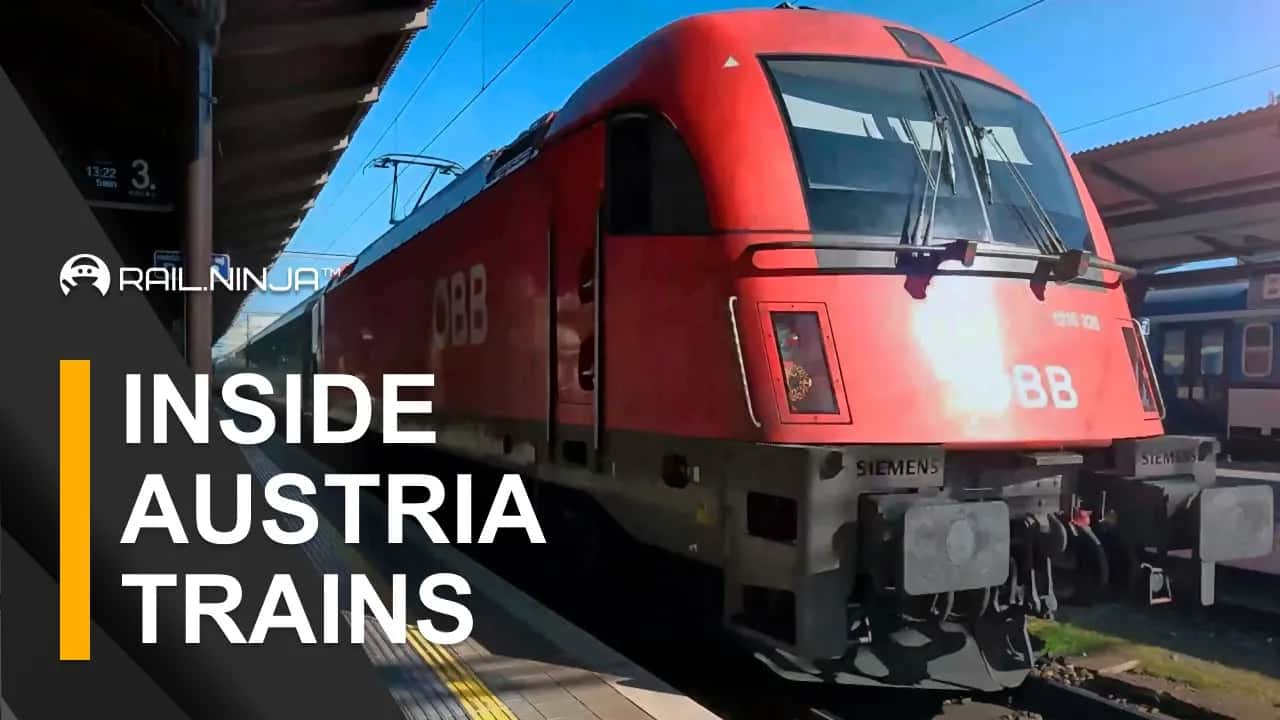
Without a doubt, one of the best ways to take in the incomparable beauty of Austria is taking a Salzburg to Vienna train. While traveling between these two fabulous cities on a high-speed train, you have an amazing chance to take advantage of the great onboard service and enjoy the scenic landscapes passing by the outside of the window. All trains operating on the route are designed to provide the highest level of comfort during the ride and are equipped with comfortable seats, power sockets, free Wi-Fi, and spacious luggage area. What is more, Salzburg to Vienna train schedule boasts numerous daily departures so you can easily plan your dream Austria adventure!
Salzburg to Vienna trains Information
Salzburg
Salzburg Hauptbahnhof, AustriaSalzburg Gnigl Station, AustriaSalzburg South Bus Station, AustriaSalzburg Hauptbahnhof Platform 2, AustriaSalzburg Hauptbahnhof Platform 3, AustriaSalzburg Hauptbahnhof Platform 3A-C, AustriaSalzburg Hauptbahnhof Platform 5C-F, AustriaSalzburg Hauptbahnhof Platform 8D-E, AustriaSalzburg Hauptbahnhof Platform 9D-E, Austria
309 km
Vienna
Vienna Hauptbahnhof, AustriaVienna Meidling, AustriaVienna Rennweg, AustriaVienna Westbahnhof, AustriaVienna Central Bus Station, AustriaVienna Erdberg (VIB), AustriaVienna Franz-Josefs, Austria
2 h 25 m
Shortest travel time:
$44
Lowest ticket cost:
42
Avg. daily departures:
00:13
Earliest departure:
22:11
Latest departure:
Salzburg is cooler than Vienna thanks to its Alpine proximity, and it was historically an independent prince-archbishopric, with Mozart's birthplace, Hohensalzburg Fortress, Mirabell Gardens, and the Benedictine St. Peter's Abbey, which dates back to the 7th century. Vienna grew from a Roman encampment called Vindobona over 2,000 years ago and later served as the capital of the Habsburg Empire, with its historic center holding UNESCO World Heritage status, the Ringstrasse, a 19th-century boulevard lined with grand buildings, and Schönbrunn Palace, the former summer residence of the Habsburg monarchs. The Kunsthistorisches Museum holds vast Habsburg art collections, the giant Ferris wheel in the Prater is a Viennese classic, and Vienna's coffee houses are recognized by UNESCO. Both cities shine for Christmas markets from mid-November to December, so winter is a great time to visit, while spring and fall are lovely too.
Popular questions about trains from Salzburg to Vienna
With 42 departures and travel time of about 2.5 hours, the railway is a great opportunity for travelers to take Salzburg to Vienna day trip to get acquainted with this beautiful Belgium's city. Just take Railjet, Nightjet, or Railjet Xpress train and relax having wonderful journey.
Yes. OBB provides three types of trains for your Salzburg to Vienna journey. Whether you choose Railjet, Nightjet, or Railjet Xpress, you will be carried from Salzburg Hauptbahnhof directly to Vienna Hauptbahnhof only in about 2.5 hours.
Train tickets from Salzburg to Vienna start at €13.99, with typical fares from €20 to €60 depending on class and how far ahead you book. You can purchase tickets online, at the station, or through a booking app, and booking early is the cheapest way to travel. Customers should check the dates carefully, since prices rise on weekends and around events.
Yes. Many unlimited travel passes cover this route, so check whether your pass requires a seat reservation. This is a real advantage if you plan several train journeys across Europe, for example continuing on to Germany.
Not really. Airport transfers, security, and check-in erase any time saved, and flights are rarely cheaper than the train. If you're arriving from London or another far-off city, it's easier to fly into Vienna and then take the train to Salzburg.
Driving takes about 2 hours 45 minutes via the A1 motorway. Driving on Austrian motorways requires a vignette or toll sticker, and parking in the city center can be difficult, so most travelers prefer the train.
Mozart's birthplace is one of Salzburg's top attractions, in a compact old town that is a UNESCO World Heritage Site. Salzburg was historically an independent prince-archbishopric, and the Benedictine St. Peter's Abbey dates back to the 7th century. Hohensalzburg Fortress and Mirabell Gardens are both within walking distance.
Vienna's historic center holds UNESCO World Heritage status, and the Ringstrasse is a 19th-century boulevard lined with grand buildings. Schönbrunn Palace is the former summer residence of the Habsburg monarchs, and the Kunsthistorisches Museum holds vast Habsburg art collections.
Yes. Both cities shine for Christmas markets from mid-November to December, with festive events, mulled wine, and local crafts. Spring and fall are also lovely, but book early for winter dates.
Book your tickets early, check the platform at the station on arrival, and bring a light jacket, since Salzburg is cooler than Vienna. If you can, catch an early train so you have enough time to discover both cities, and consider an overnight stay in each rather than a rushed day trip.
Salzburg is compact and Alpine, tied closely to Mozart and its musical history, while Vienna is much larger, with imperial palaces, world-class museums, and a lively Viennese café culture. Both are easily linked by a fast, frequent train, so an Austria itinerary is simple to plan.
Yes. Salzburg - Vienna is one of the most frequently asked questions among travelers planning an Austria trip, and the short answer is that the train is the easiest way. Direct trains run about every 30 minutes, ticket prices are reasonable if you book in advance, and the ride works as a comfortable day trip or as part of a longer itinerary.
You can buy Vienna train tickets online, in an app, or at the station. Compare train tickets across a few dates, because ticket prices are lowest when you book in advance and rise on weekends and in July, the busiest summer month. If you're coming from England or another far-off country, book your tickets before you travel so you're not hunting for a seat on arrival.
Yes, it's doable as a day trip, but two cities in one day is rushed. With about 2.5 hours each way you'll lose a lot of time on the train, so an overnight stay in each of the two cities is more enjoyable. If you only have one day, choose one city and explore it properly.
Salzburg Old Town, a UNESCO World Heritage Site, sits along the Salzach River, and its compact streets are easy to explore on foot. The cathedral, Mozart's birthplace, and Hohensalzburg Fortress are all close together, and the old town is also a great place to try local food.
Vienna has a wealth of attractions, from Schönbrunn Palace and the Ringstrasse to the coffee houses and classical concerts. The city center is compact and well served by public transport, so it's easy to explore without a car, and the food scene ranges from traditional Wiener Schnitzel to modern cafés.
The two cities, Salzburg and Vienna, make a rewarding pair because they feel so different. Salzburg features a Baroque Old Town inspired by Italian architecture, and Mozart was born there in 1756. Vienna adds a grand imperial capital, and Vienna's State Opera reopens in fall after its summer closure, so timing your visit around the music season is worthwhile. July is the hottest month in Vienna at 81°F, so spring and fall are more comfortable.
In Salzburg, try Bosna, a popular street food, Salzburger Nockerl, a famous dessert, and Mozartkugeln chocolates, invented in Salzburg in 1890. In Vienna, Wiener Schnitzel originated in the 19th century and Sacher Torte was created in 1832, so a food-focused stop in each city is a great way to taste the difference between them.
Extensive Network
One platform, 34+ destinations, 700+ routes around the globe.
Convenient Booking
We speak your language and offer over 20 payment methods.
Excellent Rating
Read authentic Rail Ninja reviews and see what our travelers say about us.
Flexible Planning
You can conveniently book train tickets for up to a year in advance!
Real Human Support
Need a hand? Contact our customer support before or during your trip.