
Departure Schedule
Morning departures
Fastest trip6 hrs 53 min
Longest trip7 hrs 40 min
Earliest05:30
Latest10:50
Departures3
Evening departures
Fastest trip7 hrs 39 min
Longest trip7 hrs 39 min
Earliest19:30
Latest19:30
Departures1
Night departures
Fastest trip7 hrs 10 min
Longest trip7 hrs 10 min
Earliest22:50
Latest22:50
Departures1
Travelling from Budapest to Prague by Train
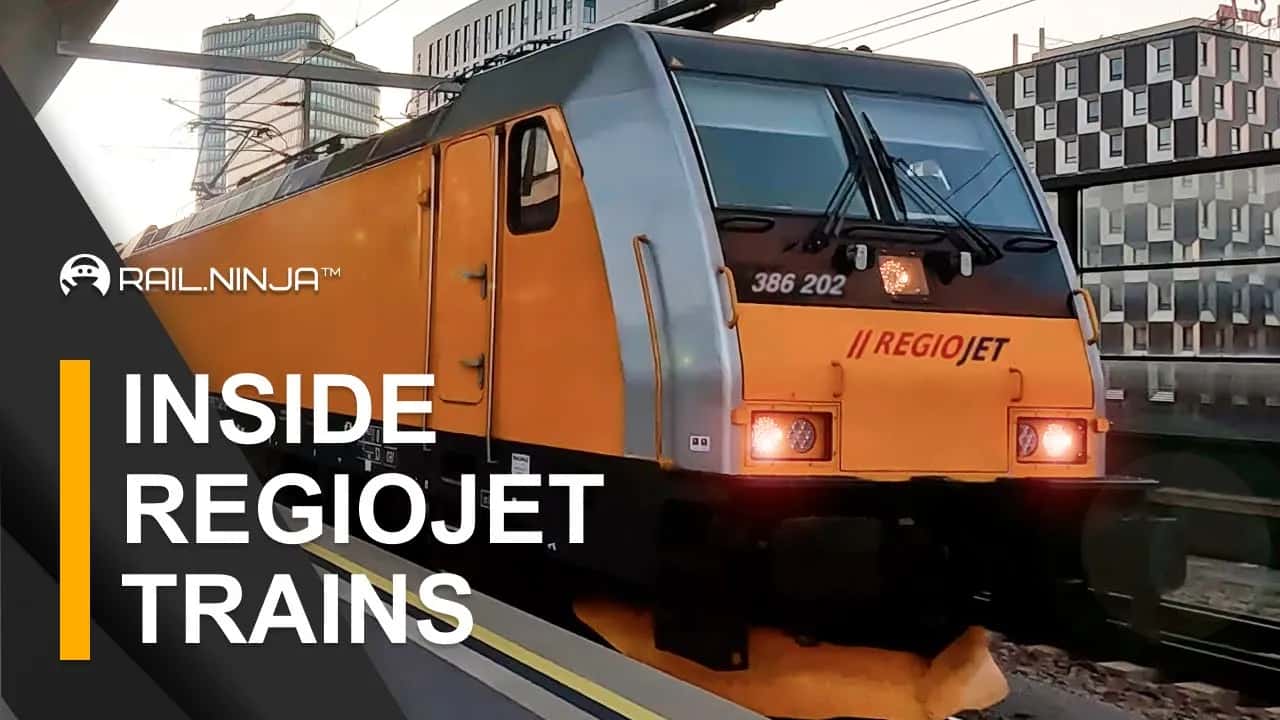
Sit back and relax as you travel in comfort on a modern train, from Budapest to Prague - one of the smartest ways to travel between the cities. Onboard the safe and modernly equipped air-conditioned train you can find spacious seats and large panoramic windows. Other great benefits are the locations of the rail stations that the Budapest to Prague train departs from and arrives to - right in the heart of town, making it very simple to get around.
One of the most scenic ways to travel between two of Central Europe's great cities is taking a train from Budapest to Prague. The distance from Budapest to Prague is approximately 530 km, and train travel from Budapest to Prague takes around 6 hours and 53 minutes on the fastest daytime services, run by EuroCity (EC) trains departing from Budapest Nyugati station — one of the city's grand historic train stations — and arriving into Prague's main hub. Trains from Budapest to Prague run several times daily, with train tickets starting at €20 when booked in advance, and every seat comes with free Wi-Fi and power sockets, so the journey doubles as a comfortable stretch of downtime rather than dead travel hours.
Budapest to Prague trains Information
Budapest
Keleti, HungaryNyugati, HungaryDeli, HungaryKelenföld, HungaryZuglo, HungaryNepliget Bus Station, HungaryRakospalota-Ujpest, Hungary
443 km
Prague
Prague Main Station, CzechiaPraha-Holešovice, CzechiaPrague UAN Florenc, CzechiaPrague Na Knížecí bus station, CzechiaPrague Cerny Most bus station, CzechiaPrague Main Station - Parking, Czechia
6 h 53 m
Shortest travel time:
£32
Lowest ticket cost:
5
Avg. daily departures:
05:30
Earliest departure:
22:50
Latest departure:
Popular questions about trains from Budapest to Prague
As mentioned above, taking a Eurocity Budapest to Prague train is among the best options to travel between the cities. If you’ve decided to go by rail, you need to get to the Nyugati Station, located in the heart of Budapest. There you can board a fast and well-equipped train and then find yourself at the central Prague Station. The overall Budapest to Prague train time is approximately 6 and a half hours, meaning that you can explore an exhibition in Budapest’s Museum of Fine Arts in the morning and enjoy a show in the Prague National Theater in the evening without any schedule issues. There are no Budapest to Prague night trains available on the route but there is a wide range of daily departures to choose from.
The train ride between the city centers of the Hungarian capital and the capital of the Czech Republic on a high-speed RailJet train usually takes about 6 hours and 25 minutes.
There are several ways to obtain a ticket for a Budapest - Prague train. Of course, if you believe that the old time-tested ways are always the best, then you can try to purchase a ticket on the train station right before departure. But keep in mind that there are some pitfalls you might encounter in this case, such as already sold-out tickets or queuing at the ticket counter. To avoid such unpleasantries, we advise considering to use the online Rail Ninja service. This way, there is no need to wait in lines or leave your home half an hour earlier to buy a train ticket to make it in time, plus, Rail Ninja boasts an intuitive interface and allows you to buy your Budapest - Prague train tickets in advance in a matter of several minutes.
In order to get ahold of the best deals and fares, it is recommended to buy your Budapest to Prague train tickets in advance. By making early bookings you get better availability options to select from as well as guaranteed better rates than when bought last minute. Plus, on Rail.Ninja you can book tickets for your trip as early as 2 years in advance to your departure date.
Regardless of the class you travel in (1st, 2nd or Business), Railjet trains will surely surprise you with onboard amenities and sufficient luggage space, including overhead racks and special luggage areas for the storage of passengers' baggage.
Yes — EuroCity (EC) trains run directly between Budapest Nyugati station and Prague's main station, Praha hlavní nádraží, with no need to change trains. Seven direct trains run daily from Prague to Budapest, and the train journey takes approximately seven hours in either direction, with train tickets starting at €20 when booked in advance and every seat offering free Wi-Fi and power sockets.
Not always — Ryanair offers daily flights from Prague to Budapest at competitive prices, and buses are typically the lowest-cost option overall: Flixbus runs around ten daily departures with fares starting at €20 when booked in advance, and bus travel from Prague to Budapest takes around seven hours, with buses departing from Florenc Bus Station in Prague and arriving at Népliget Bus Station in Budapest. The train, however, offers the best balance of comfort, scenery, and city-centre-to-city-centre convenience without extra cost for luggage or seat selection.
Bus travel between Budapest and Prague takes about 7 hours and 20 minutes and is usually the cheapest option, while driving from Budapest to Prague takes about 5.5 to 6 hours, with the fastest driving route running via Slovakia and Brno. Both are viable alternatives if price matters more than the train's comfort, and driving offers the flexibility to stop in Bratislava or Győr along the way.
Yes — private transfers from Prague to Budapest start at €450 and offer door-to-door service, ideal for travelers with heavy luggage or those wanting to avoid public transport altogether. The direct route for private transfers takes about five hours, and sightseeing stops can be added for an extra fee, effectively turning the ride into a private tour through southern Moravia and Slovakia.
The journey includes stops in three different countries — Hungary, Slovakia, and the Czech Republic — passing through southern Moravia. Bratislava's Old Town is compact and walkable and worth a short walk if you break up the trip, Győr is a beautifully preserved Baroque city, and Lednice Palace, a UNESCO-listed Neo-Gothic masterpiece, sits just off the route, making the train ride itself part of the adventure rather than just a means of getting between two cities.
Budapest's essential stops include the grand Opera House, St. Stephen's Cathedral, the historic Jewish Quarter, and the Széchenyi Thermal Baths for a soak after a day of sightseeing. A Danube River cruise — whether a relaxed afternoon sail or an evening cruise past the illuminated Parliament building — offers some of the most stunning views in the city, and joining a tour group or booking a private tour is a great opportunity to see the highlights efficiently if you're short on time.
Prague Castle, St. Vitus Cathedral, the Astronomical Clock, and Wenceslas Square are all within a short walk of one another in the compact, walkable historic centre, with cobbled streets and hidden courtyards rewarding anyone who wanders off the main tourist path. A walking tour of the Old Town, followed by a beer in one of the city's historic pubs, is widely considered an amazing experience by visitors exploring Prague for the first time.
Budapest is larger and requires more time to explore, with grand 19th-century architecture, thermal bath culture, and panoramic views from its hills and bridges over the Danube River, while Prague's Gothic architecture and compact old town define its character compared to Budapest's broader, more spread-out design across the Danube's two banks. Both cities were shaped by the Habsburg Empire and later decades of communist rule, both have vibrant nightlife scenes, and both remain among Central Europe's most beautiful cities — a single train ride is often all it takes to answer questions about which one you'll want to return to first, and many travelers simply choose accommodation in both to make the most of two cities on one adventure.
Both work well together — many travelers spend a day or two on a Budapest tour, covering the thermal baths and Parliament, before boarding the train onward, making the Budapest Prague route a natural two-city itinerary rather than a single rushed transit day.
Yes — a private tour is especially useful in Prague's Old Town, where Charles Bridge, the Castle District, and the surrounding cobbled streets reward a guide who can navigate the crowds and point out details easily missed on a self-guided walk through Central Europe's most photographed old town.
Not easily — given the roughly 7-hour train journey each way, a same-day day trip between Prague and Budapest isn't realistic without significant extra cost in transport time, so most travelers plan at least an overnight stay in each city instead.
Services depart regularly from both cities' main stations, with public transportation links extending into three countries along the route — Hungary, Slovakia, and the Czech Republic — making Prague and Budapest well connected to the wider Central European rail network.
Yes — Prague has a medieval, Gothic, and Baroque architectural style typical of the Czech Republic, giving the Budapest and Prague combination a clear contrast: grand 19th-century Habsburg-era design in Budapest against Prague's older, fairy-tale medieval core, with the Castle District lit up beautifully at night for anyone arriving after dark.
8.8 / 10 based on 54 reviews
Extensive Network
One platform, 34+ destinations, 700+ routes around the globe.
Convenient Booking
We speak your language and offer over 20 payment methods.
Excellent Rating
Read authentic Rail Ninja reviews and see what our travelers say about us.
Flexible Planning
You can conveniently book train tickets for up to a year in advance!
Real Human Support
Need a hand? Contact our customer support before or during your trip.